
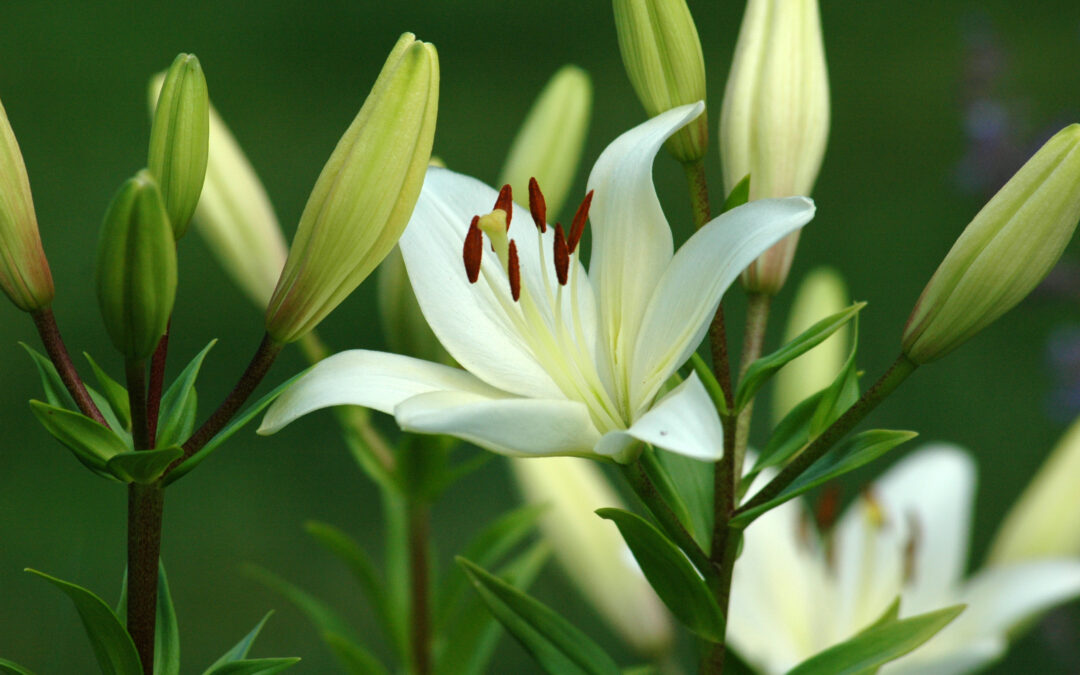
I’ve gardened in some pretty eclectic styles-a suburban arboretum, a restored native woodland and currently, a Japanesque landscape. It can feel limiting to garden with such restraint, but it’s a great way to learn how to add my own style to a such a quiet vibe. This year I’m a little obsessed with the concept of a moon garden.
The earliest were found in ancient east Asia. Japanese families gathered in the garden to eat, recite poetry and observe the moon. It was called tsukimi, or moon viewing, and was a way to create harmony and to honor time. The Chinese incorporated white stones and still water that reflected the plants and created picturesque night time silhouettes.
In the early 1500’s, a Muhgal emperor established the first chronicled moonlight garden. The sweltering climate didn’t make for pleasant daytime gardening, so spending the evenings outdoors was preferred. The most famous was created about a hundred years later on the banks of the Yamuna River where it was perfectly reflected in the pools that surrounded the Taj Mahal.
The first North American moon garden was planted in 1833 by Benjamin Poore in Indian Hill, Massachusetts. He created a space utilizing bright white flowers and populated the area with white animals, including cattle, pigeons, and a dog, to further reflect the lunar aesthetic. Also famous is the White Garden at Sissinghurst Castle in Kent, England, created by Vita Sackville-West and Harold Nicolson, a monochromatic design featuring only white and silver plants.
When designing your moon garden, choose a spot that is easy to access at night or can be viewed through a window. It should, of course, be touched by moonlight. A moon garden can be a simple grouping of potted plants and flowers, or as elaborately designed landscape. If possible, find a quiet corner away from road noise and light pollution. You want to be able to enjoy the fragrant smells of night-blooming flowers, the rustling nighttime sounds, and the reflection of the moon on plants and foliage.
Moon gardens highlight plants that glow in the moonlight. It can be magical, delighting the senses of smell, sound and sight. Traditional containers and borders are designed to maximize colors that sing in the bright light of a midsummer’s day, while a moon garden relies on hues that gleam in the hours between dusk and dark. Blossoms in whites and pale pastels shimmer as the daylight dies and silver foliage reflects the setting sun. And we can’t forget the flowers that open as the light wanes, flowering tobacco and the appropriately named four o’clocks. Many of these release their fragrance as the air cools. A perfectly peaceful place to wind down a busy day at the Garden Center!
What plants do we most appreciate at the end of a hot, muggy Wisconsin summer day? A moon garden can include trees, shrubs, grasses, perennials and annuals. It is usually created as a summer garden, but by adding deciduous shrubs and trees with interesting architectural form, a moon garden can be enjoyed year-round.
One of my favorite annuals is flowering tobacco. The white, trumpet-shaped flowers stay closed during the day and open at dusk, perfuming the air with a sweet, jasmine-like fragrance. The strong fragrance attracts night-time pollinators like sphinx moths and bats. Flowering tobacco is also available in shades of pink, and an especially pretty pale green. Other white flowering annuals that I like are climbing moonflowers, four o’clocks, white petunias and sweet alyssum. All of these are perfect for containers, as well as garden beds, making a moon garden possible for a small patio or terrace. And you can add the silver foliage with trailers like dune saladbush or Silver Falls ponysbush. I also love using the white and green cultivars of caladium for a bolder, slightly tropical vibe.
You can create a more permanent garden by planting perennials. Smaller fountain grasses like the silvery green Adagio, add color, texture and sound. And the bright white flowers of Visions in White astilbe or Summer Sparkles Baby’s Breath really shine. For some height, add a white flowering clematis like Tranquilite. Lamb’s Ears and Jack Frost heartleaf bugloss bring in the silver.
I think that any self-respecting moon garden needs a bench or to provide a place to relax and reflect. If space allows, add garden art, like a gazing ball or twinkle lights. Other decorative elements like a wind chime, water feature, or whirligig bring sound into the moon garden.
Remember, you don’t have to design a whole garden this way. Just pick an area suited to sitting out in the evening with a clear view of the night sky. Speaking from experience, my small patio flanked by white, scented plants and fairy lights is our favorite spot in the garden.