
NATIVE PERENNIALS
Stop in to see our complete variety of perennial plants!

Wisconsin has at least a dozen bumblebee species and about 400 wild bee species. In fact, flies, beetles, moths, and butterflies — any insect that goes for nectar — can pollinate.
The pollinator list is long, but a few unique names stand out.
- Monarch Butterflies
- Goldenrod Soldier Beetle
- Black Swallowtail Butterfly
- Sliver Spotted Skipper
- Red Admiral Butterfly
- Hummingbird Moths
- Sphinx Moth
- Phlox Moth
- Yellow Collared Scape Moth
- Mason Bee
- Squash Bee
- Leafcutter Bee
Home for the Butterflies

Butterflies lay their eggs on the underside of milkweed leaves.
The eggs hatch into hungry little caterpillars who feast on the milkweed leaves.
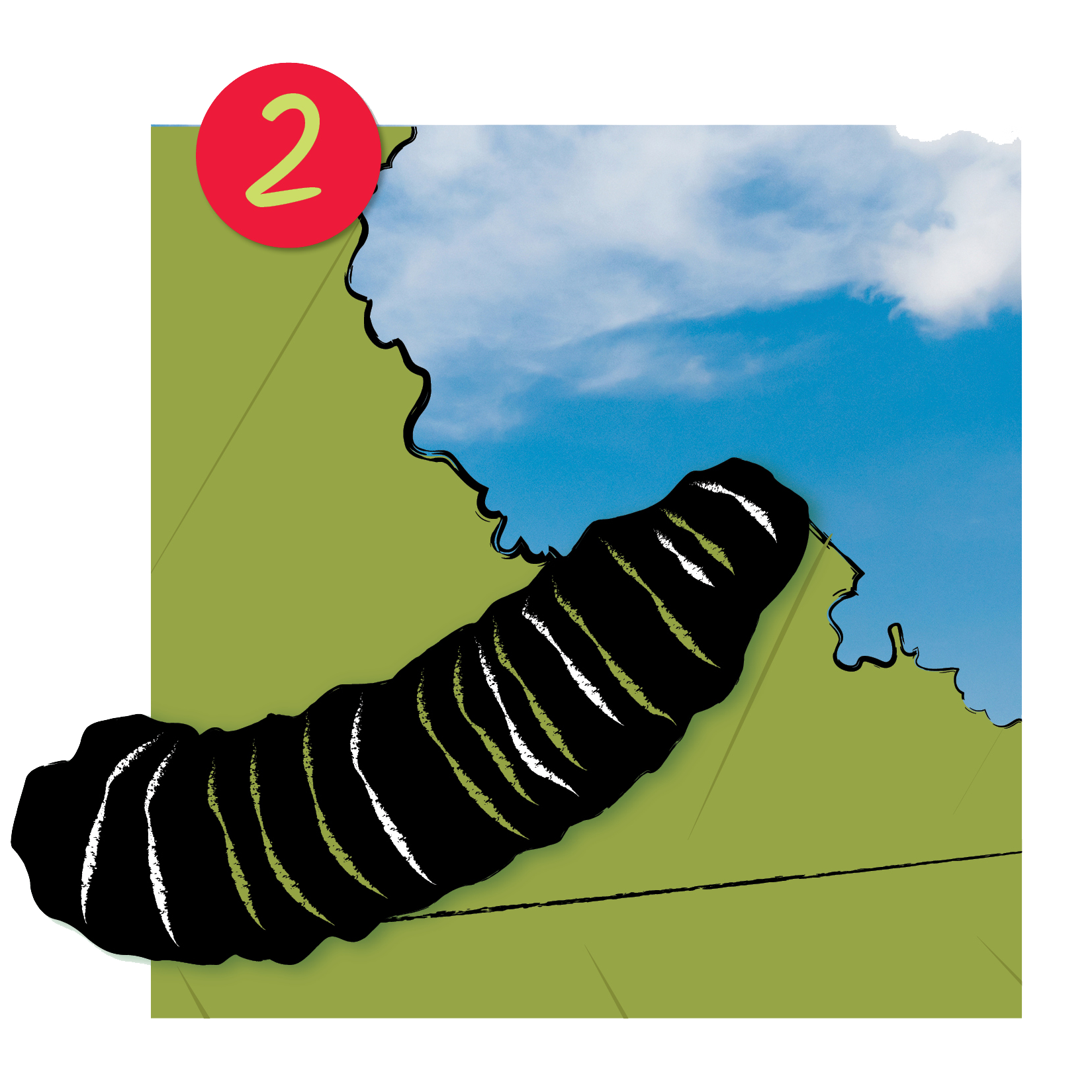
Soon, the caterpillars find a comfy spot, hang tight, and transform into Monarch Butterflies!
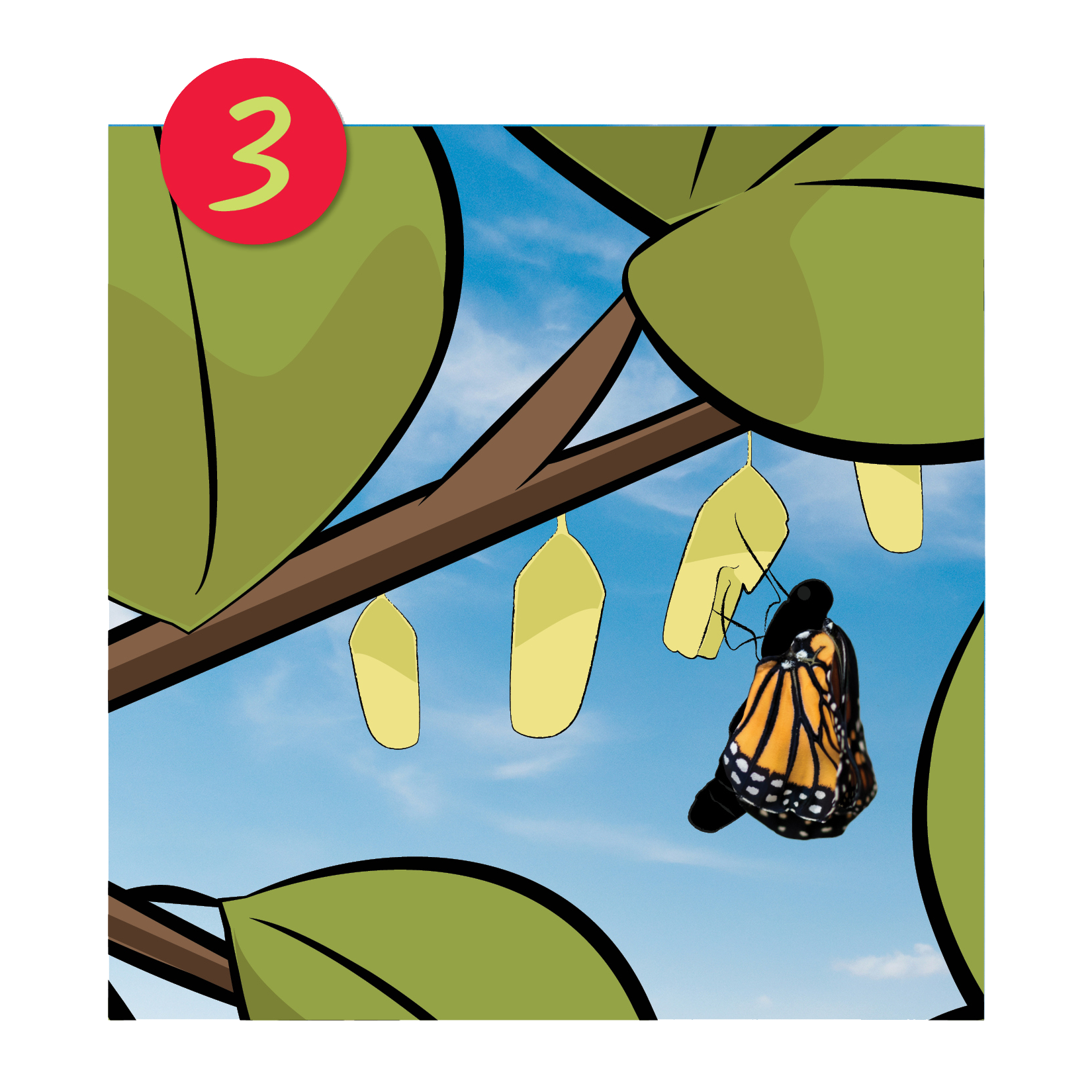
The Monarch Butterflies will fly around pollinating a variety of pretty flowers.
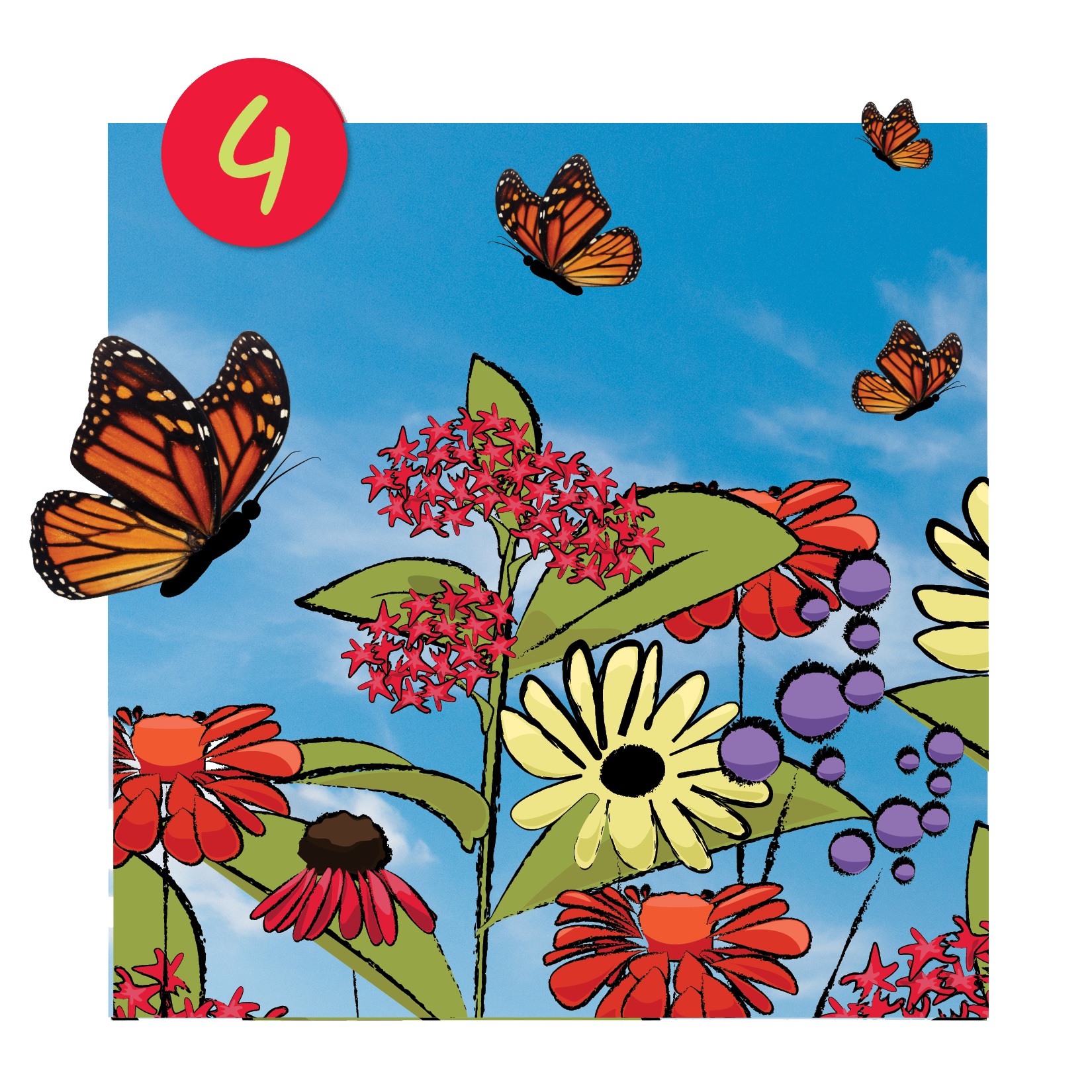
Food for the Bumblebees
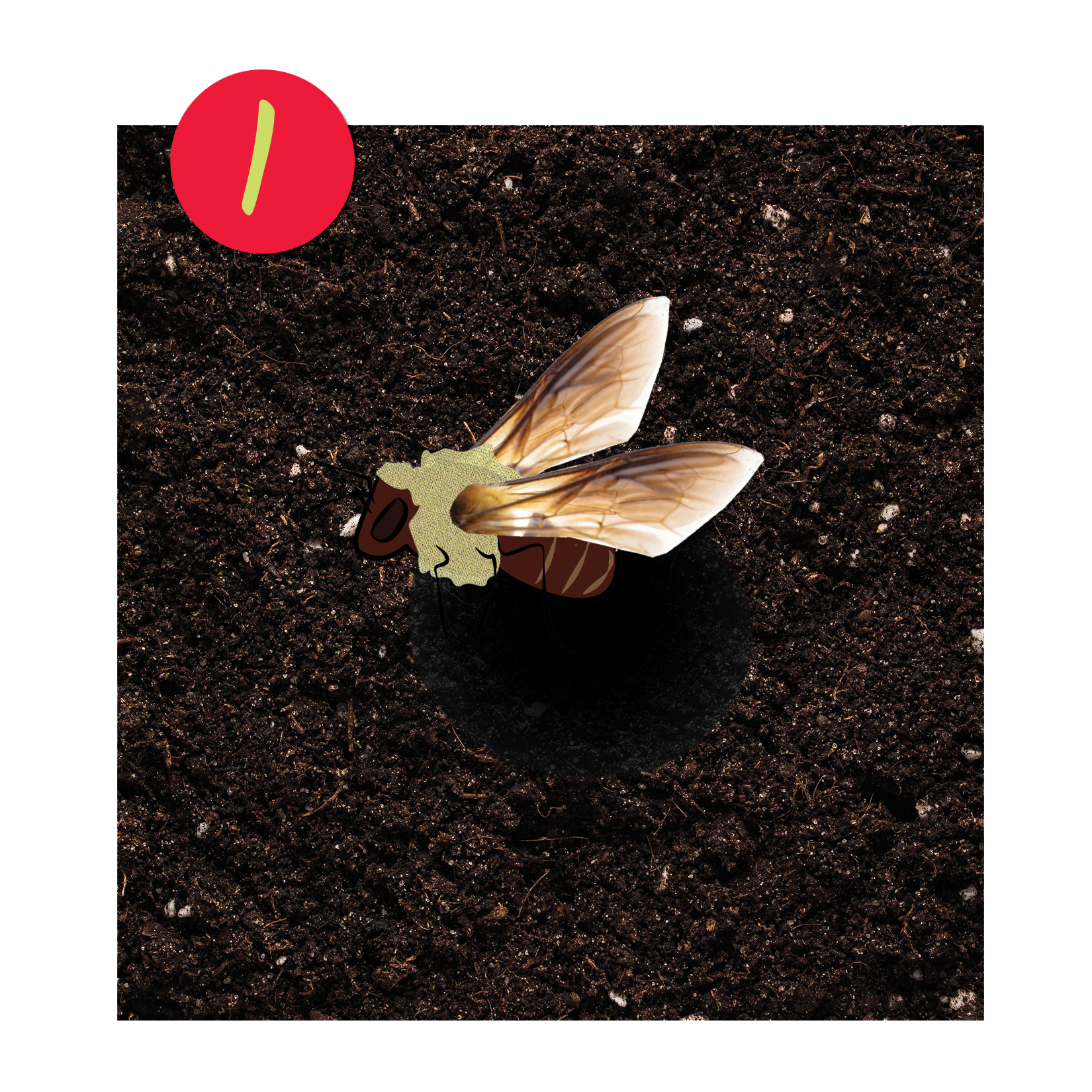
The bumblebee leaves the nest on a foraging flight for nectar and pollen.
The little bee uses buzz pollination to shake pollen loose from the flower.
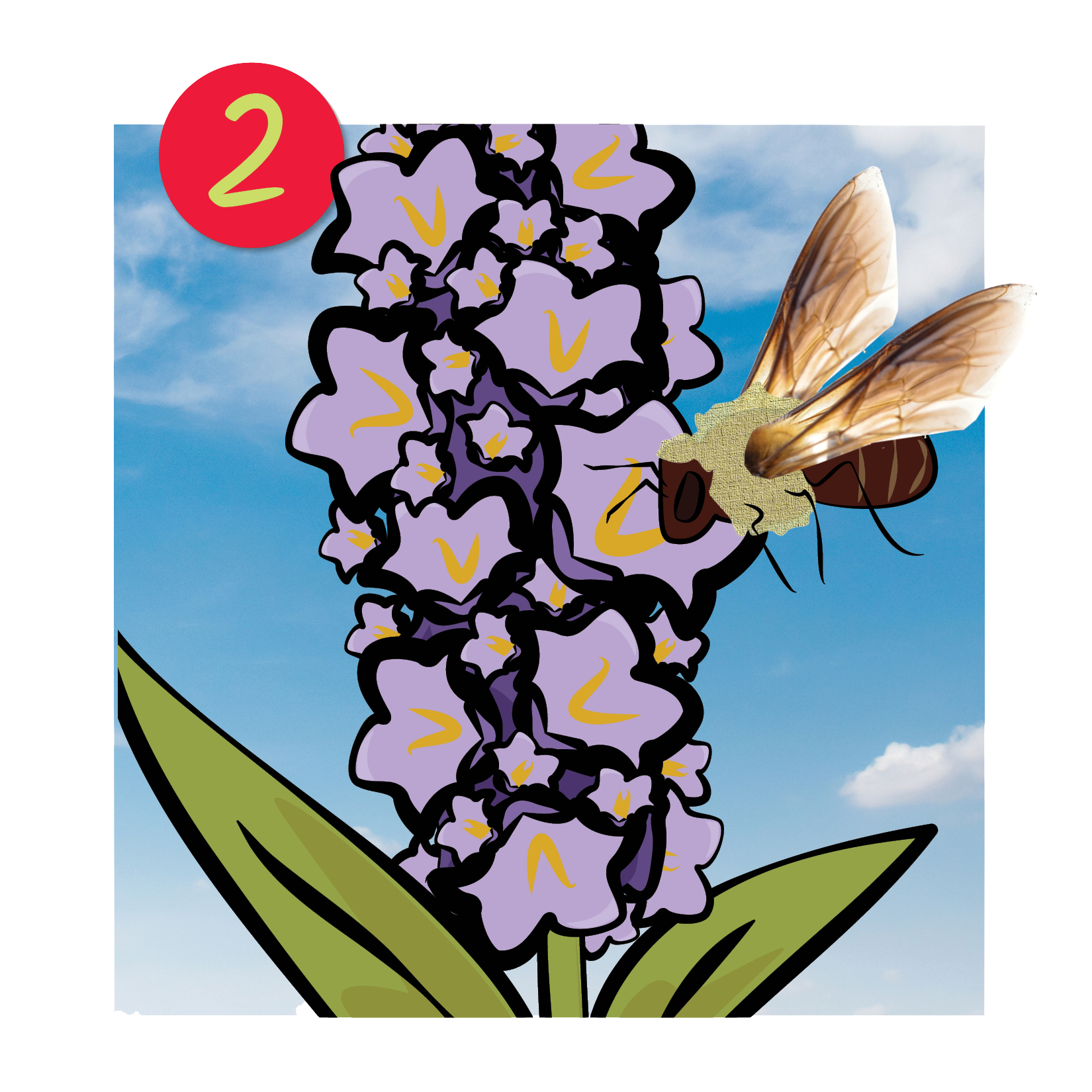
The pollen sticks to the fuzzy body and hind legs
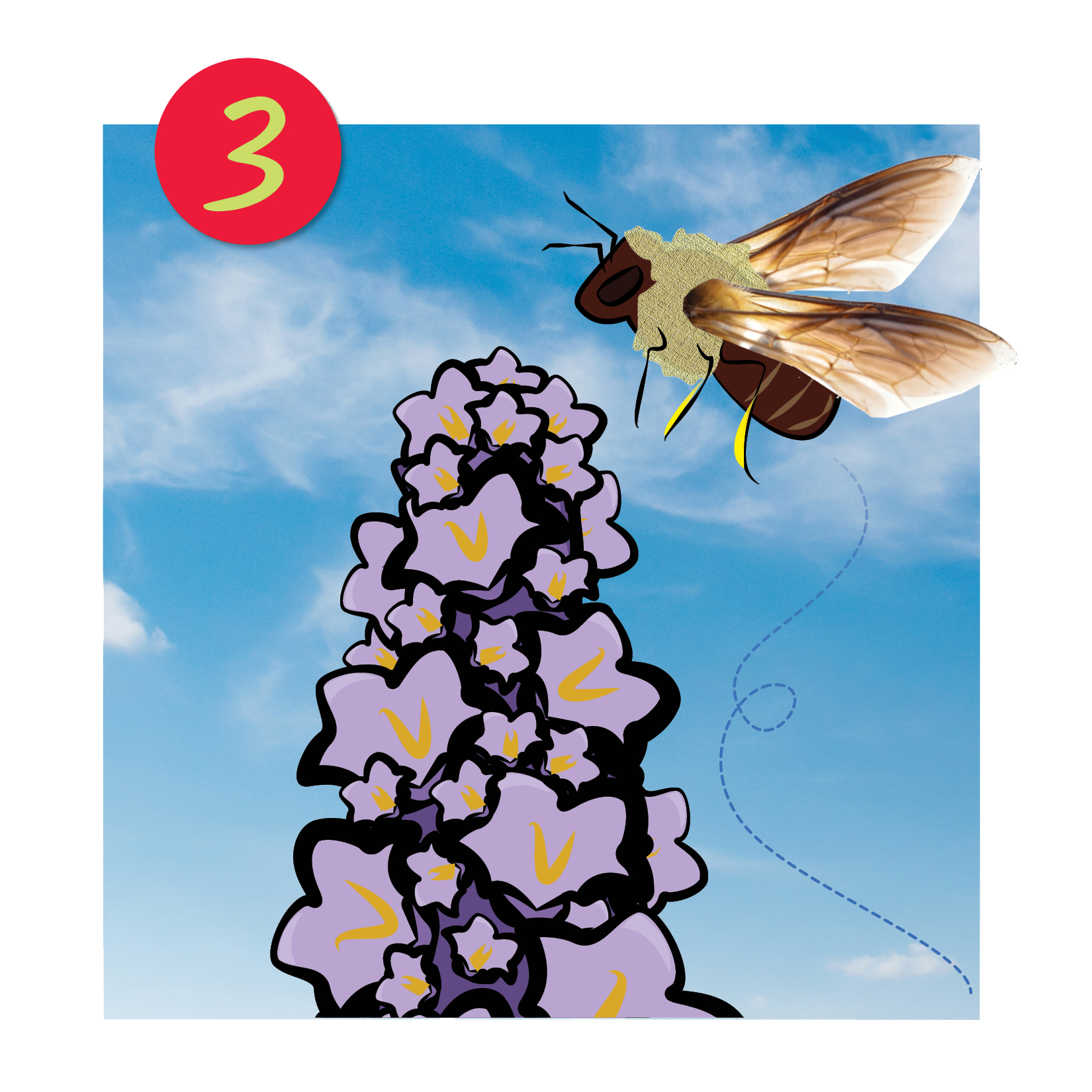
The bumblebee keeps moving from flower to flower, collecting and releasing pollen.
Energy for the Honeybee

The honeybee leaves the hive on a foraging flight for nectar and pollen.

The little bee reaches for nectar from the flower.
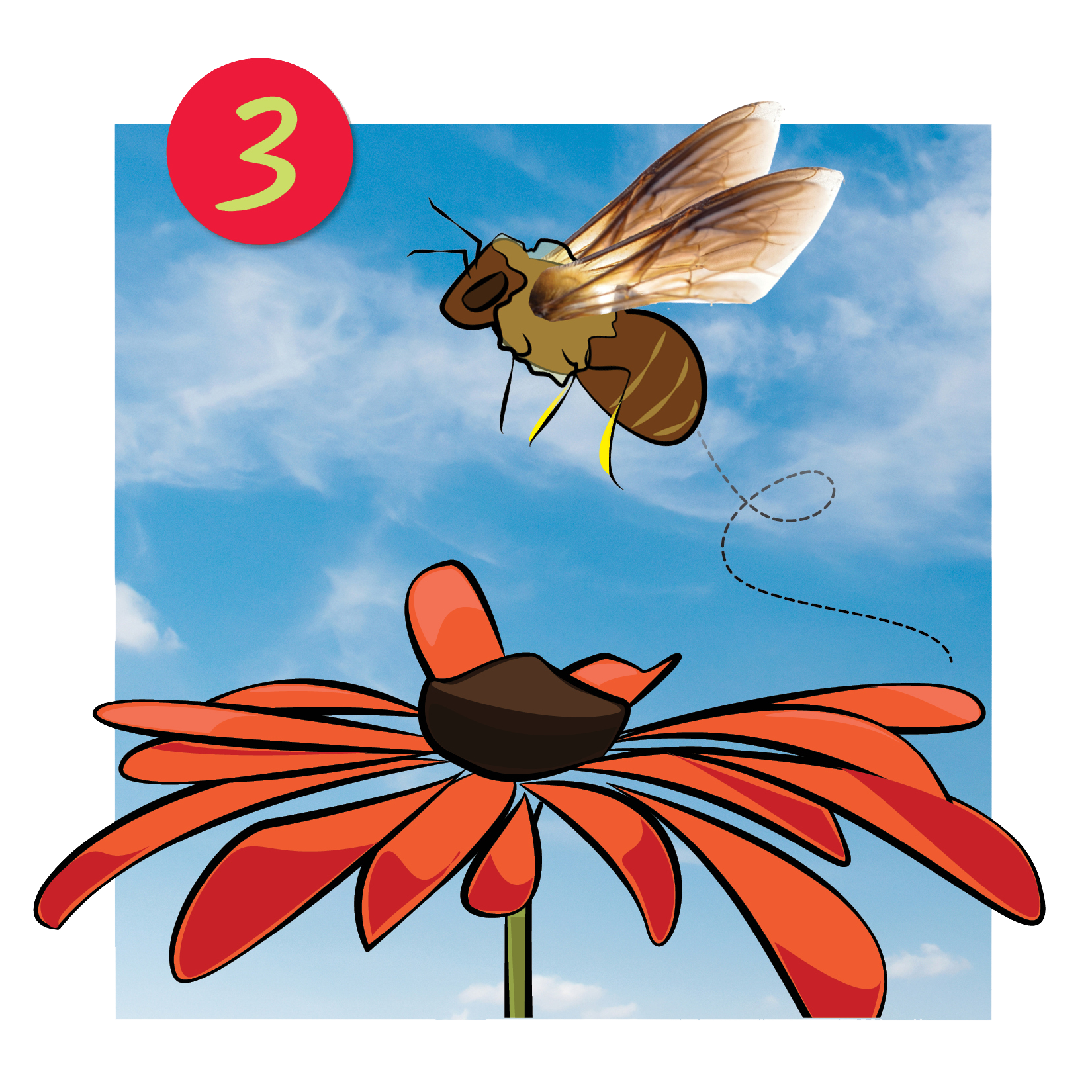
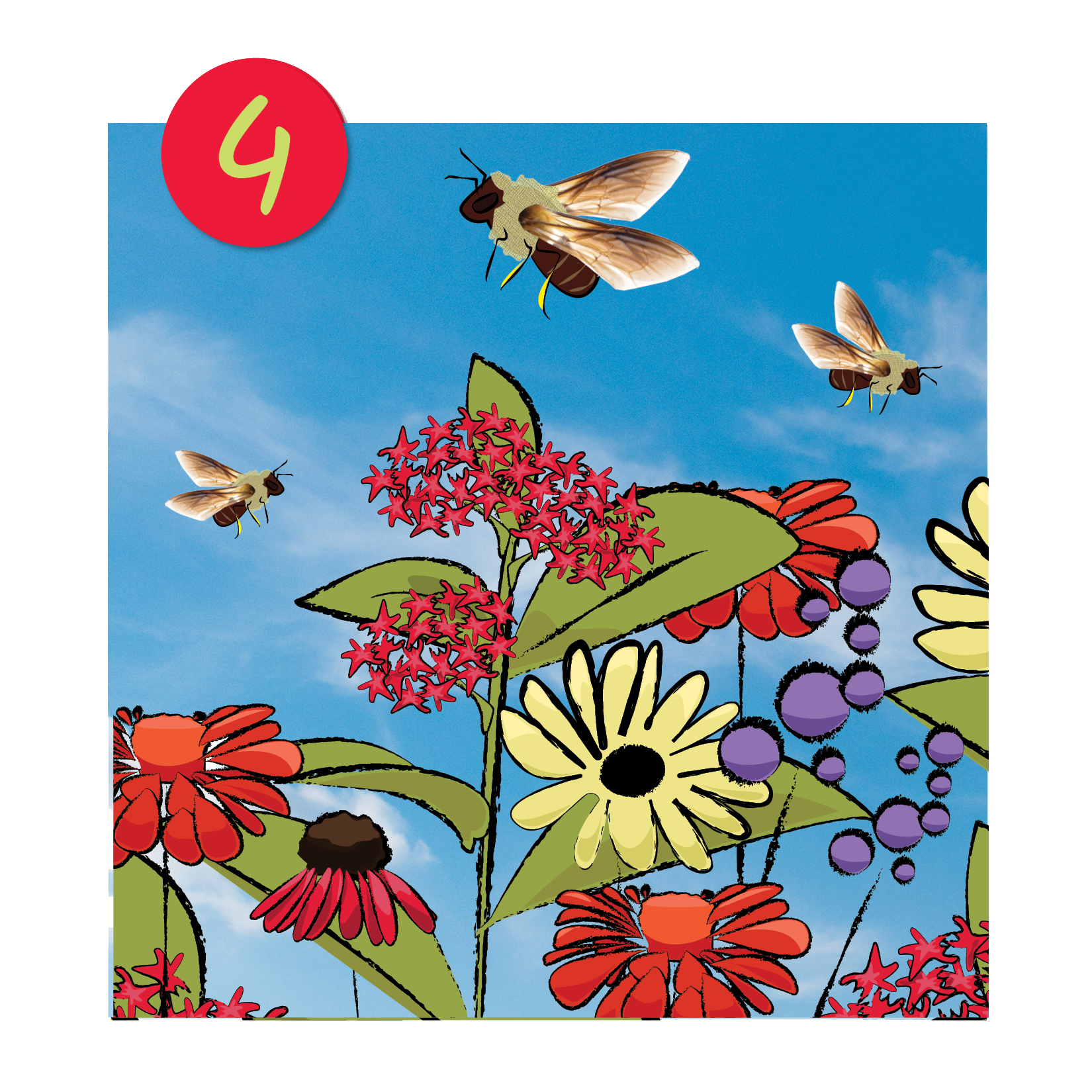
The pollen covers the fuzzy body and hind legs

The bumblebee keeps moving from flower to flower, collecting and releasing pollen.
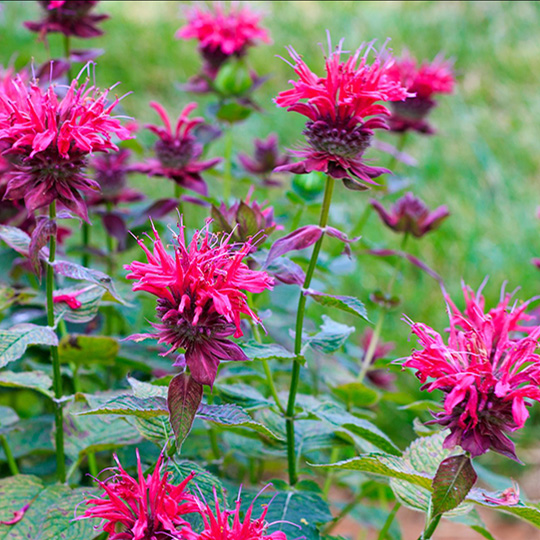
Bee Balm Monarda
Water: Water regularly until established | Light: Full Sun, Partial Shade | Soil: Rich, Moist, Well-Drained soils
Bee Balm produces square stems lined with large, dark-green, oval leaves that end in dense, rounded clusters of bright red flowers.
- Well known for attracting hummingbirds
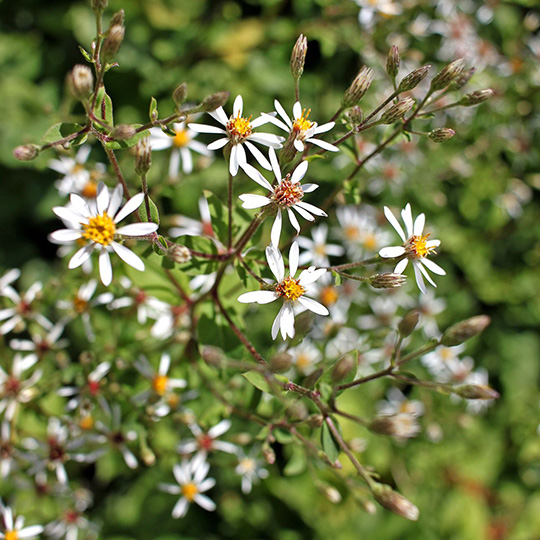
Big-Leaved Aster Eurybia Macrophylla
Water: Consistent Moisture | Light: Full Sun, Part Shade, Shade | Soil: Moist to Drier soils
Big-Leaved Aster is known for its large, heart-shaped basal leaves, tall stems topped with clusters of pale purple, daisy-like flowers around yellow centers.
- Larval host for the Pearl Crescent Butterfly, Silvery Checkerspot & Goldenrod Hooded Owlet Moth
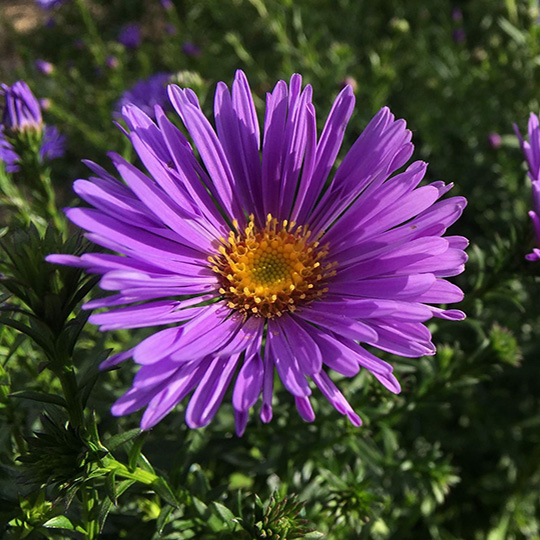
New England Aster Symphyotrichum novae-angliae
Water: Consistent Moisture until established | Light: Full Sun, Partial Shade | Soil: Fertile, Moist, Slightly Acidic soils
New England Aster is a tall bushy perennial with lance-shaped leaves, hairy, sturdy stems, and abundant purple daisy-like flowers surrounding yellow centers.
- A vital source for migrating Monarch butterflies by providing nectar from late summer through October
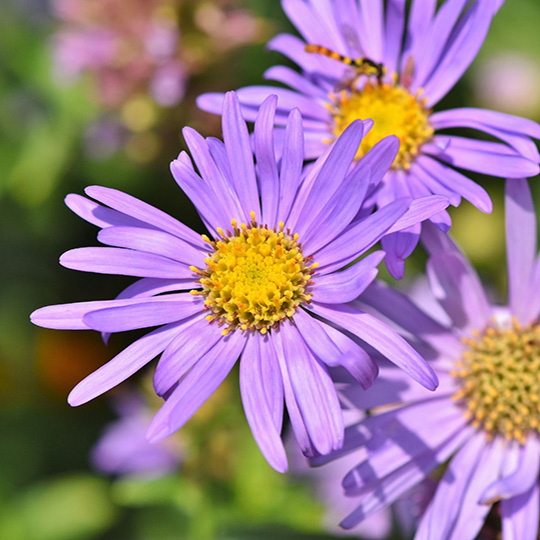
Smooth Aster Symphyotrichum laeve
Water: Moderate Moisture | Light: Full Sun, Partial Shade | Soil: Highly Adaptable, Well-Drained soils
Smooth Aster has dark-green foliage that is smooth on top and rough underneath, and is known for its clusters of lavender-to-pale purple daisy-like flowers.
- Larval host for the Pearl Crescent Butterfly and Silvery Checkerspot Butterfly
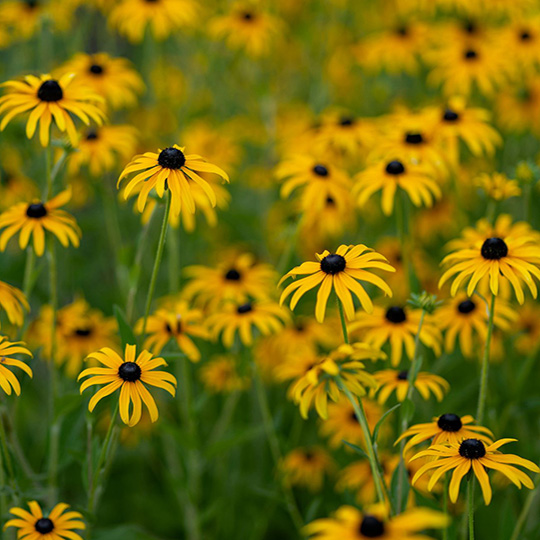
Sweet Black-Eyed Susan Rudbeckia subtomentosa
Water: Moist to Medium soils | Light: Full Sun, Partial Shade | Soil: Clay, Rich, Moist soils
Sweet Black-Eyed Susan is known for its bright golden-yellow petals surrounding a dark brown, cone-shaped center atop 1-3 ft stems and scattered, oval leaves covered with bristly hairs.
- Highly attractive to the specialist Heterosarus Rudbeckiae Bee
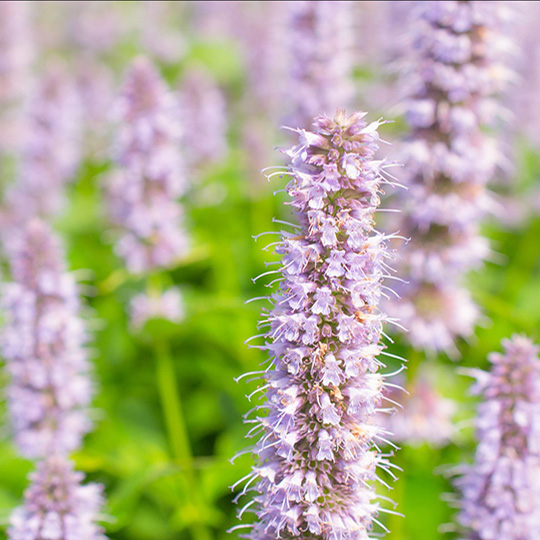
Blue Fortune Anise Hyssop Agastache ‘Blue Fortune’
Water: Moderate watering until established | Light: Full Sun, Partial Shade | Soil: Very Adaptable, Well-Drained soils
Blue Fortune Anise Hyssop is a 2 to 4 ft. perennial with dense spikes of small, tubular, bright blue flowers and oval, toothed leaves.
- A pollinator magnet with midsummer to early fall blooms that support a diverse range of pollinators, including bees, butterflies, and hummingbirds
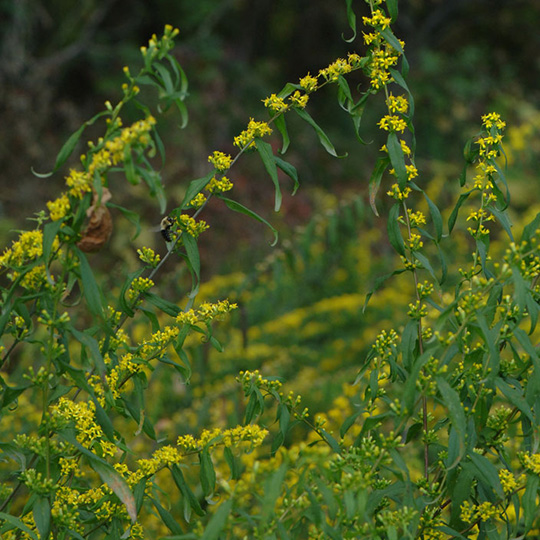
Blue-Stemmed Goldenrod Solidago Caesia
Water: Consistent moisture until established | Light: Sun, Part Shade | Soil: Various soils
Blue-Stemmed Goldenrod is known for its arching blue-green stems and clusters of bright yellow flowers that rise 1-3 ft.
- Crucial source of late season nectar, August to October, for a wide variety of native bees and butterflies, including the Goldenrod Hooded Owlet Moth
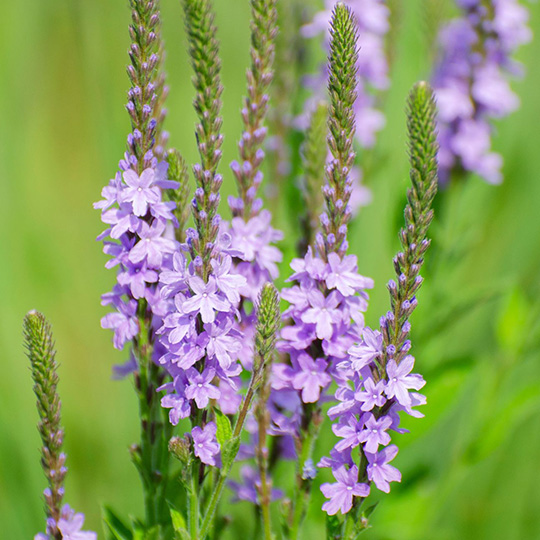
Blue Vervain Verbena hastata
Water: Consistently Moist | Light: Full Sun, Partial Shade | Soil: RMoist soils
Blue Vervain is recognized for its numerous slender spikes of small violet-blue flowers, branching upwards like the arms of a candelabra.
- Key food source for Verbena bees
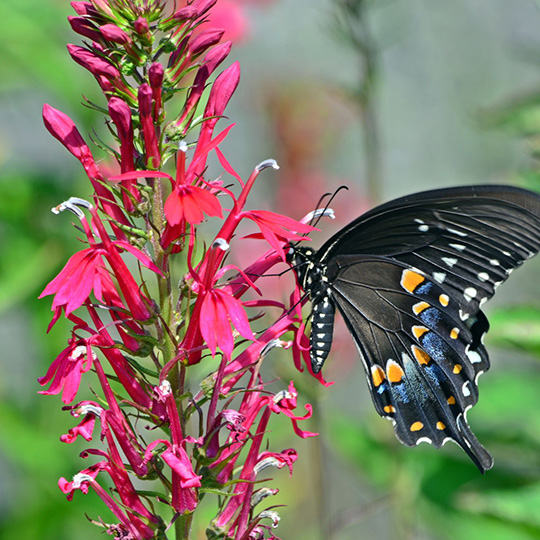
Cardinal Flower Lobelia cardinalis
Water: Consistent Moisture | Light: Full Sun, Partial Shade, Shade | Soil: Wet, Rich, Organic, Humus soils
Cardinal flowers are a striking perennial with tall spikes of scarlet red, tubular flowers, and green lance-shaped leaves.
- A primary nectar source for Ruby-Throated Hummingbirds, as the tubular-shaped flowers are perfect for long beaks
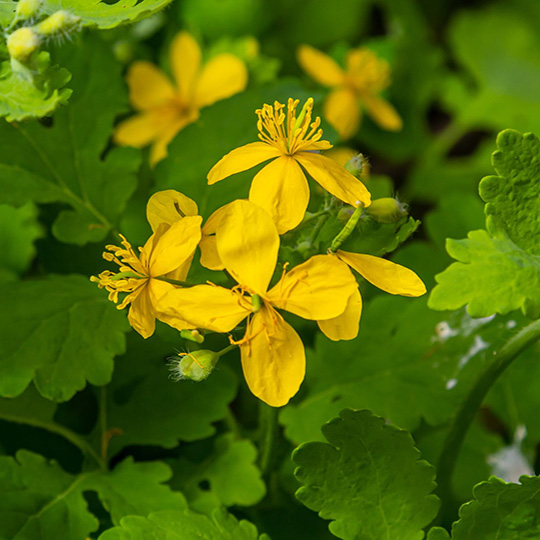
Celandine Poppy Thalictrum dioicum
Water: Consistent Moisture | Light: Full Sun, Partial Shade | Soil: Rich, Fertile, Slightly Acidic soils
Celandine Poppy grows bright yellow, four-petaled flowers on blue-green lobed leaves.
- Vibrant yellow flowers attract bees, flies, and beetles in late spring
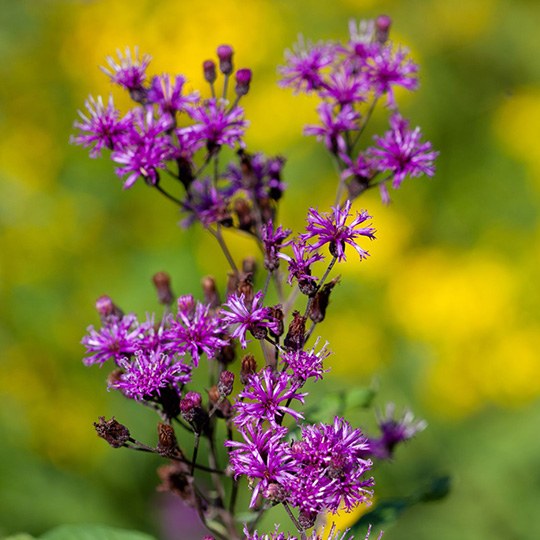
Common Ironweed Vernonia Fasciculata
Water: Consistent Moisture | Light: Full Sun, Part Shade | Soil: Moist, Heavy soils
Common Ironweed is a stout, unbranched perennial with stems bearing numerous lance-shaped, coarsely-toothed, dark-green leaves and known for its clusters of vivid rose-purple flowers that bloom atop tall, sturdy stems.
- Larval host for American Painted Lady butterfly, Parthenice Tiger moth, and Crossline Skipper
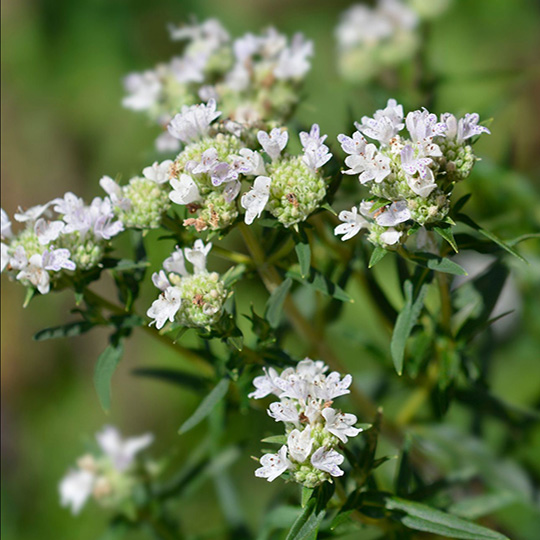
Common Mountain Mint Pycnanthemum virginianum
Water: Consistent Moisture | Light: Full Sun, Partial Shade | Soil: Moist, Wet soils
Common Mountain Mint is an aromatic perennial with opposite, narrow lance-shaped leaves and clusters of small white flowers near silvery-white bracts that give a frosted appearance.
- Dense flowers loaded with nectar attract bees, butterflies, and wasps
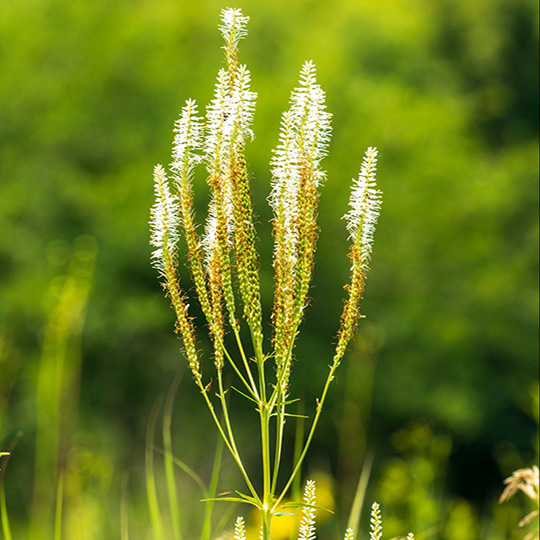
Culver’s Root Veronicastrum virginianum
Water: Moist to medium wet, does not tolerate drying out for too long | Light: Partial Shade, Shade | Soil: Nutrient Rich, Humus, Well-Drained soils
Culver’s Root forms narrow, lance-shaped leaves that spiral around a stem that produces candelabra-like spikes of tiny white flowers.
- Larval host plant for the Culver’s Root Borer Moth
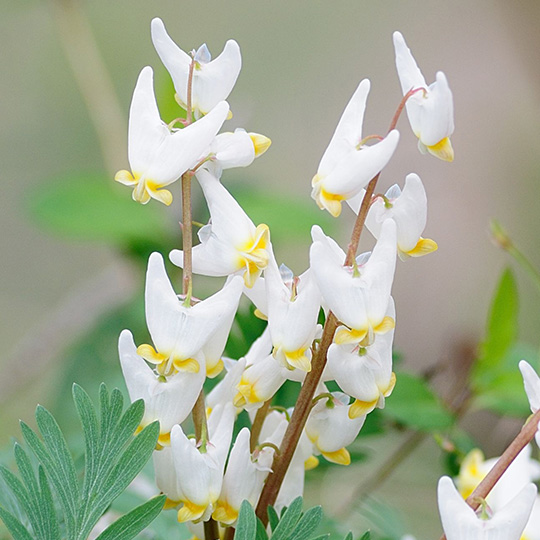
Dutchman’s Breeches Dicentra Culcullaria
Water: Consistent moisture during growing season | Light: Partial Shade, Shade | Soil: Humus Rich, Moist, Well-Drained soils
Dutchman’s Breeches form dense, high masses of deeply cut, fern-like leaves and leafless flower stalks bearing a row of nodding, fragrant, white, pantaloon-shaped flowers.
- A key plant for the endangered Rusty Patched Bumblebee
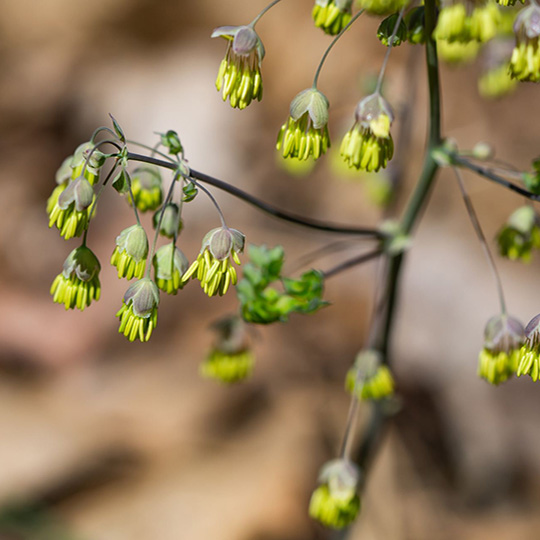
Early Meadow Rue Thalictrum dioicum
Water: Consistent Moisture | Light: Partial Shade, Shade | Soil: Rich, Moist, Well-Drained soils
Early Meadow Rue creates fern-like leaves and clusters of small greenish-white to yellow flowers on slender stems.
- Early spring blooms, from April to May, offer crucial support for emerging native bees
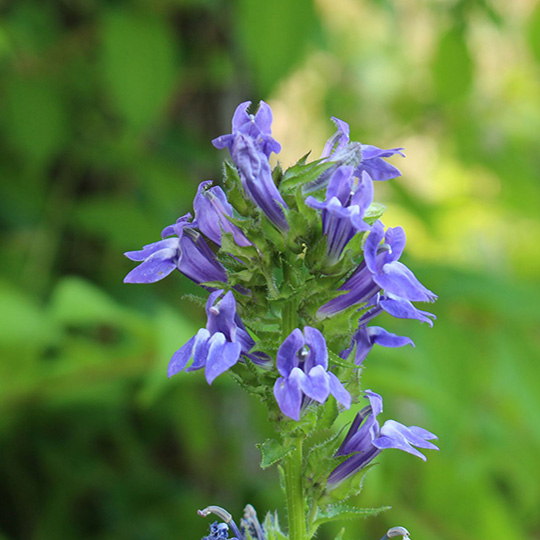
Great Blue Lobelia Lobelia siphilitica
Water: Consistent Moisture| Light: Full Sun, Partial Shade | Soil: Moist, Rich, Humus soils
Great Blue Lobelia is known for its striking spikes of blue flowers and upright leafy clumps of lance-shaped coarse leaves.
- Highly sought after by Monarch Butterflies and Eastern Tiger Swallowtails

Heart-Leaved Meadow Parsnip Zizia aptera
Water: Consistent Moisture until established | Light: Full Sun, Partial Shade | Soil: Adaptable
Heart-Leaved Meadow Parsnip has basal leaves and a heart-shaped base, creating clusters of small, bright-yellow flowers arranged in flat-topped umbrellas.
- Larval host for the Black Swallowtail Butterfly
- Attracts the specialist Golden Alexanders Mining Bee for pollen
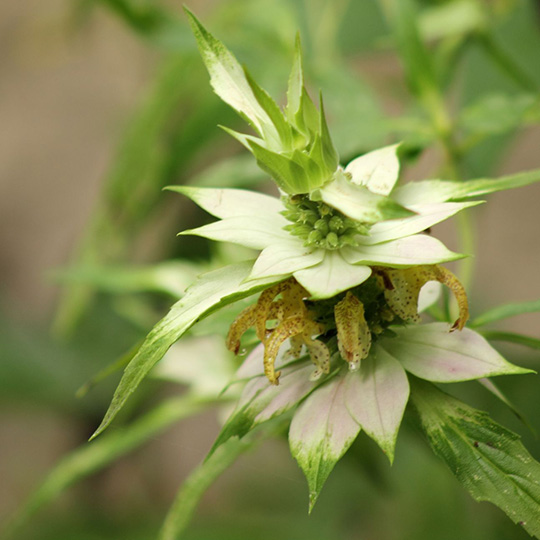
Horse Mint Monarda punctata
Water: Consistent Moisture until established, then highly drought-tolerant | Light: Full Sun, Partial Shade | Soil: Dry, sandy, Gravelly, Well-Drained soils
Horse Mint is an aromatic perennial with narrow lance-shaped leaves and stacked clusters of pale-yellow flowers that are surrounded by showy bracts in pink, lavender, or cream.
- Supports the endangered Karner Blue Bee, which Wisconsin holds the largest population of

Jacob’s Ladder Polemonium reptans
Water: Medium to wet, not drought-tolerant | Light: Full Sun, Partial Shade | Soil: Humus Rich, Moist, Well-Drained soils
Jacob’s Ladder grows opposite leaflets along the stem, resembling rungs of a ladder, and clusters of bell-shaped, pale lavender flowers.
- Early season blooms, April-May, attract the specialist bee Jacob’s Ladder Miner Bee, and queen bees establishing colonies
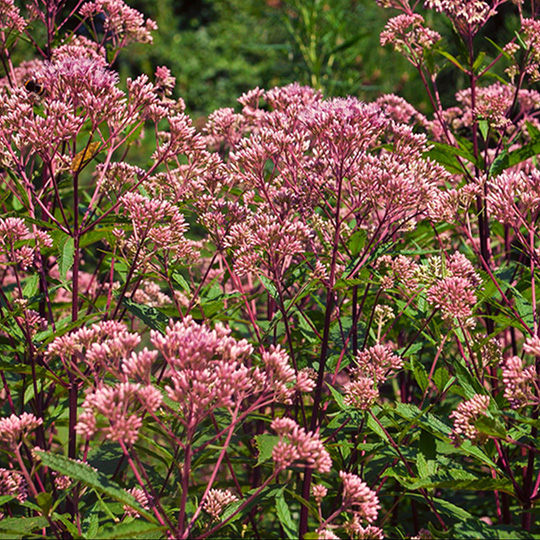
Joe Pye Weed Eutrochium maculatum
Water: Consistent Moisture | Light: Full Sun, Partial Shade | Soil: Rich, Loamy, Moist soils
Joe Pye Weed is a tall native perennial that produces large domed clusters of pink and purple flowers, along with spiraling lance-shaped leaves around the stem
- Attracts a variety of bumblebees, honey bees, skippers, and butterflies
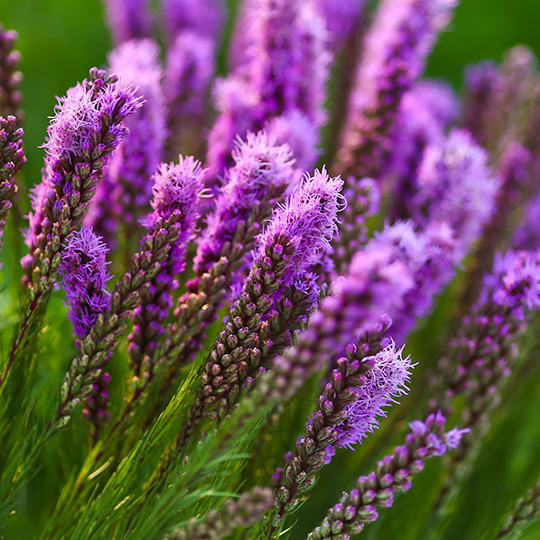
Meadow Blazing Star Liatris Ligulistylis
Water: Water regularly until established | Light: Full Sun | Soil: Variety of soils
Meadow Blazing Star is a clump-forming, narrow, grass-like perennial prized for its dense spikes of bright purple, fluffy flower heads.
- Well known for attracting Monarch Butterflies

Obedient Plant Physostegia Virginiana
Water: Consistent moisture but can tolerate some drought | Light: Full Sun, Partial Shade | Soil: Moist, well-Drained soils
Obedient Plant grows square stems that bear long, lance-like leaves lined with tubular pink to lavender blooms opening from the bottom upward. If the flowers are bent, they tend to stay in the new position for a while.
- This produces high amounts of nectar that appeals to a wide range of pollinators, though particularly attractive to Ruby-Throated Hummingbirds as they prepare for migration
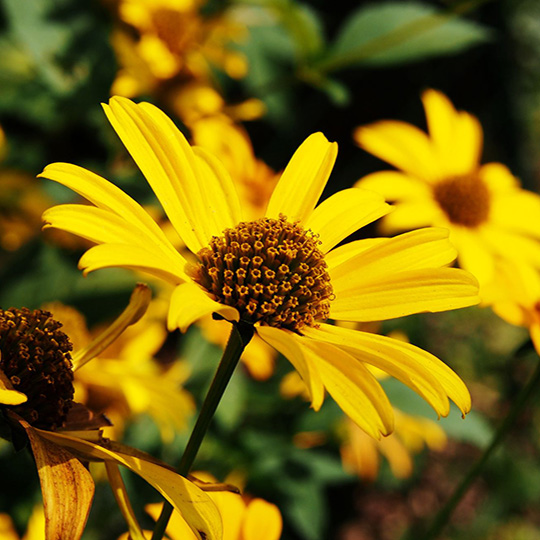
Oxeye Sunflower Heliopsis Helianthoides
Water: Low to moderate water needs | Light: Full Sun, Partial Shade | Soil: Various soils
Oxeye Sunflower is a common, 3-6 ft. perennial that produces deep green serrated lance-like leaves and abundant bright yellow, daisy-like flowers with golden centers that resemble a small version of a yellow sunflower.
- The ground-nesting False Sunflower Cuckoo Nomad Bee relies heavily on this plant
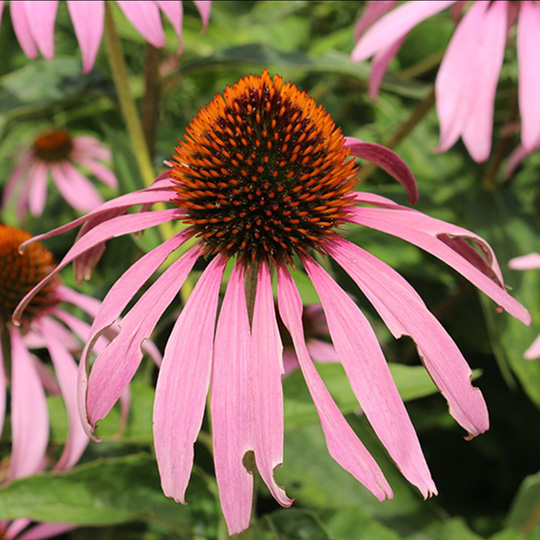
Pale Purple Coneflower Echinacea pallida
Water: Regularly water until established, then highly drought-tolerant | Light: Full Sun, Partial Shade | Soil: Moist to Dry, Well-Drained soils, avoid wet, heavy waterlogged soils
Sweet Black-Eyed Susan is known for its bright golden-yellow petals surrounding a dark brown, cone-shaped center atop 1-3 ft stems and scattered, oval leaves covered with bristly hairs.
- Blooms earlier than other coneflowers, acting as a “bridge” food source for bumblebees, butterflies, and skippers.
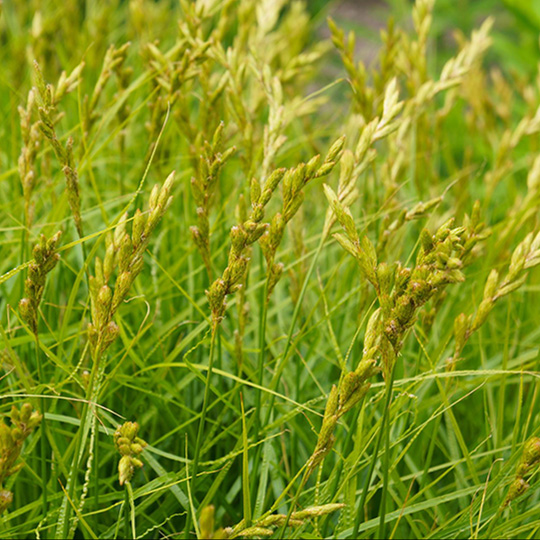
Plains Oval Sedge Carex Brevior
Water: Consistent moisture until established | Light: Full Sun, Part Shade | Soil: Dry to Moderate Moisture soils
Plains Oval Sedge grows 1-2 ft, forming dense clumps of fine, grass-like green leaves, and produces small prickly oval seed heads.
- The dense, clump-forming nature of this sedge provides crucial nesting sites and protection for ground-nesting bees and other beneficial insects

Purple Lovegrass Eragrostis spectabilis
Water: Consistent Moisture until established, then highly drought-tolerant | Light: Full Sun, Partial Shade | Soil: Medium Moist, Well-Drained, Sandy, Gravelly soils, intolerant of heavy wet soils
Purple Lovegrass forms a tidy clump of fine, narrow green leaves and airy, cloud-like flower heads made up of tiny purple spikelets rising just above the foliage.
- Larval host for the Zabulon Skipper Butterfly
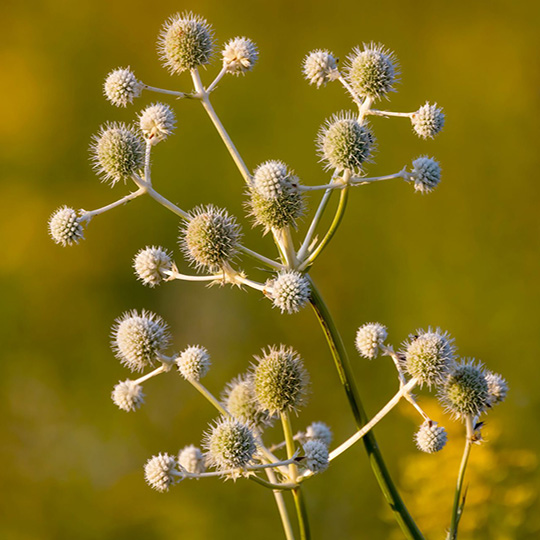
Rattlesnake Master Eryngium yuccifolium
Water: Low to Medium Water | Light: Full Sun | Soil: Sandy, Rocky, Clay, Well-Drained soils
Rattlesnake Master is prized for its unique architectural form with long, stiff leaves and globes of small white flowers.
- Provides a massive concentrated food source for bees, wasps, beetles, flies, and butterflies
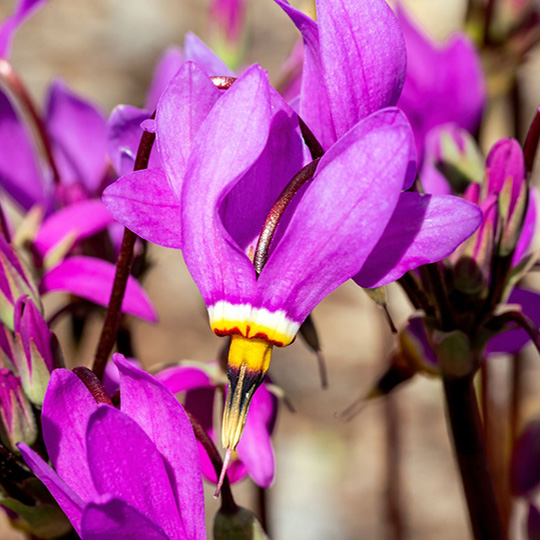
Shooting Star Primula meadia
Water: Consistent Moisture | Light: Partial Shade | Soil: Rocky, Humus Rich, Well-Drained soils
Shooting Star has leafless arching stalks that rise from bright-green basal leaves, producing distinctive pink flowers with swept-back petals that resemble a shooting star in motion.
- Rely on “buzz pollination”, where bees, especially queen bumblebees, vibrate their bodies to shake pollen from the narrow, nodding flowers
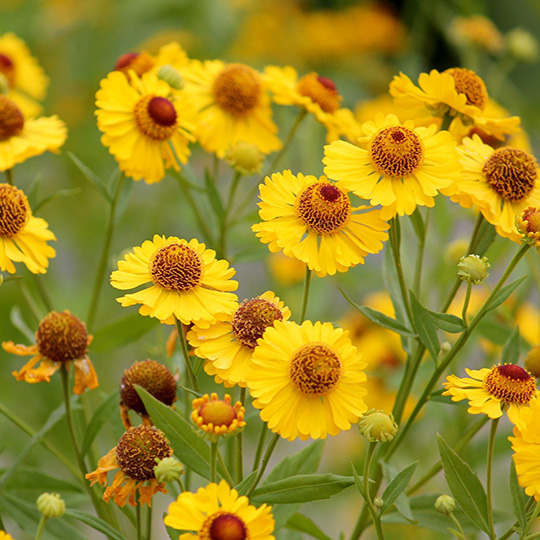
Common Sneezeweed Helenium autumnale
Water: Consistent Moisture | Light: Full Sun | Soil: Wet, Clay soils
Common Sneezeweed is an erect perennial with many elongate leaves and numerous abundant daisy-like yellow flowers with a raised, cone-shaped yellow center.
- Larval Host for the Lady and Dainty Sulphur Butterflies
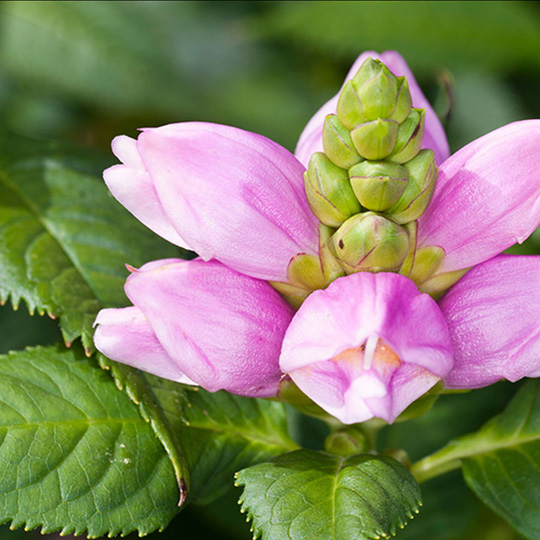
Turtlehead Chelone glabra
Water: High Moisture | Light: Partial Shade, Shade | Soil: Rich, Humus, Slightly-Acidic soils
Turtlehead forms dark green, glossy oval leaves with serrated edges, and is known for its distinctive snapdragon-like blooms resembling a turtle’s head.
- Bumblebees can wiggle their way into the uniquely shaped flowers for nectar and pollen
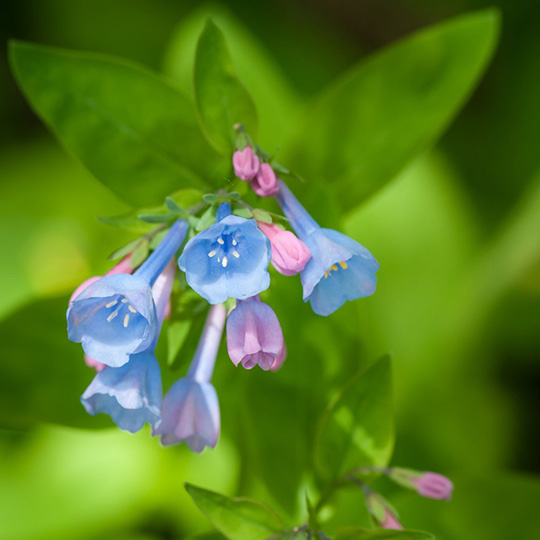
Virginia Bluebells Mertensia virginica
Water: Consistent moisture during active growth, avoid waterlogged soil | Light: Partial Shade, Shade | Soil: Humus Rich, Moist, Slightly Acidic soils
Virginia Bluebells are perennials with smooth, gray-green, oval leaves that produce clusters of nodding, trumpet-shaped flowers that open pink and then mature to a soft sky blue.
- These shade-loving plants bloom from March to April, offering a vital lifeline to pollinators waking up from hibernation
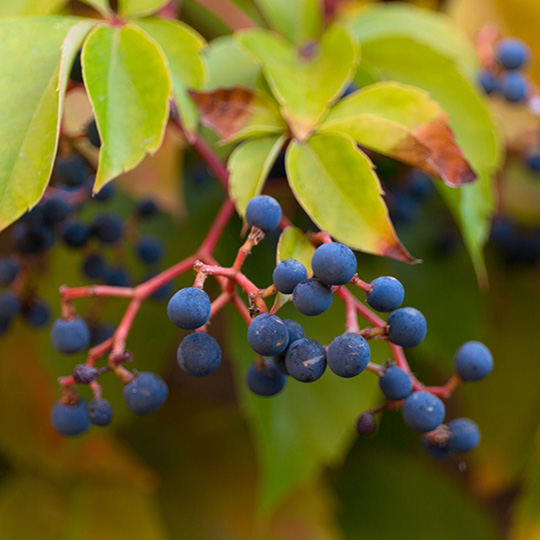
Virginia Creeper Parthenocissus quinquefolia
Water: Consistent Moisture | Light: Full Sun, Partial Shade, Shade | Soil: Well-Drained, Moist, Humus Rich soils
Virginia Creeper is a vining perennial with five-pointed leaflets radiating from a center point and producing small greenish clusters of flowers that develop into dark black berries. Foliage transitions from a spring green to shades of red, orange, and burgundy in autumn.
- Attracts specialist bees such as the Sumac Cellophane and Metallic Epauletted Sweat Bee

Virginia Waterleaf Hydrophylium virginianum
Water: Consistent Moisture | Light: Partial Shade, Shade | Soil: Rich, Moist, Well-Drained, High Organic Matter soils
Virginia Waterleaf is a low-growing perennial with deeply lobed, pale and blotchy leaves and clusters of small bell-shaped, pale lavender to white flowers rising on slender stems above the foliage.
- A key source for the Waterleaf Cuckoo Bee, among other varieties of bees, in early spring, May-June

White Prairie Clover Dalea candida
Water: Consistent moisture until established, then highly drought-tolerant | Light: Full Sun | Soil: Sandy, Gravely, Well-Drained, Poor soils
White Prairie Clover has many small leaves along the stem that produce distinctive white, cylindrical flower spikes.
- Highly attractive to bumblebees, honey bees, plasterer bees, and other small native bees. Butterflies, wasps, and beetles benefit as well.

Wild Bergamot Monarda fistulosa
Water: Consistent Moisture until established | Light: Full Sun, Partial Shade | Soil: Highly Adaptable
Wild Bergamot is valued for its fragrant, fuzzy foliage and clusters of lavender-pink flowers
- Flowers are perfectly designed for the Ruby-Throated Hummingbird
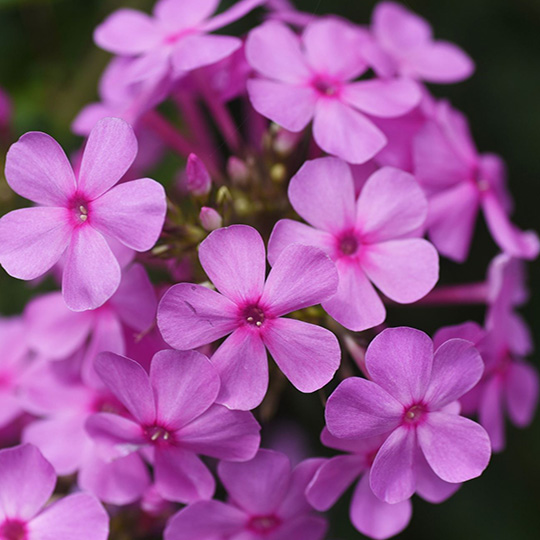
Woodland Phlox Phlox Divaricata
Water: Water regularly until established | Light: Partial Shade, Shade | Soil: Rich, Moist soils
Woodland Phlox forms loose mats of soft green foliage topped with fragrant, star-shaped flowers in shades of pale blue, lavender, or light violet.
- Attracts many pollinators, including bees, butterflies, skippers, and moths